
Frameless PM Motor Sizing: Inputs to Confirm Before a Quote
A practical RFQ checklist for frameless permanent-magnet motors: load profile, mechanical envelope, thermal mounting, winding data, and drive requirements.
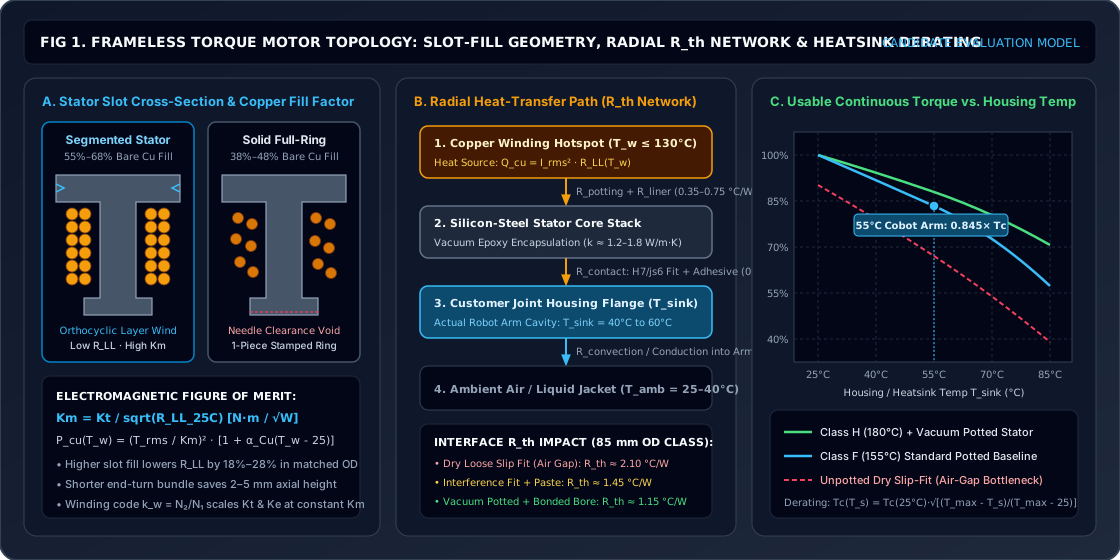
This guide helps an OEM prepare a frameless motor inquiry. It does not list PMDD Motor catalog ratings or claim that a particular motor is available.
Start with the driven load
Record the continuous and peak torque the axis needs, the speed at each load point, and how long each point lasts. Include acceleration, deceleration, dwell, reversals, and the expected operating hours.
If you know shaft power and speed, the corresponding torque is:
T (N·m) = 9550 × P (kW) / n (RPM)
This is a conversion between mechanical power and torque at a stated speed. It does not select a motor. Starting torque, peak duration, load inertia, losses, and the drive current limit still need review.
Describe the mechanical envelope
Provide a drawing or dimensions for the stator outside diameter, rotor bore, active stack, total axial height, mounting features, cable exit, and nearby hardware. Call out clearances that matter during assembly and operation.
For a frameless motor, the motor is integrated into the customer’s assembly. Bearing support, rotor retention, air-gap alignment, housing stiffness, and installation sequence therefore belong in the interface review. A nominal diameter alone does not establish interchangeability.
Define the thermal boundary
State the housing or heatsink material and dimensions, contact area, cooling method, ambient temperature, and any nearby heat sources. Also specify the temperature limits for the winding, magnets, adhesive, potting, sensors, and surrounding machine where known.
Continuous torque depends on the complete thermal path and the duty cycle. A value measured or calculated for one fixture should not be transferred to another housing without checking the boundary conditions. Ask the supplier to identify the mounting and test conditions behind any continuous rating it provides.
Match winding and drive requirements
Share the available DC bus or AC supply, continuous and peak current limits, maximum speed, feedback device, control mode, and cable length. Ask for winding resistance, inductance, back-EMF, and torque-constant data only with the measurement method, temperature, and current convention stated.
Do not assume that a motor will work with a named servo drive because the voltage or connector appears similar. The motor data, encoder interface, drive limits, and commissioning procedure need to be checked together.
Compare stator constructions on the application
Segmented and solid stators differ in assembly, winding access, structure, and how the motor transfers heat into the housing. There is no universal winner. Ask the supplier to explain the construction offered for the requested geometry and to provide the drawing and evidence that apply to that build.
RFQ checklist
- Load profile with continuous and peak torque, speed, duration, and duty cycle.
- Stator and rotor envelope drawing, axial clearance, mounting, and cable routing.
- Housing or heatsink details and operating environment.
- Supply, drive, feedback, and control requirements.
- Sample quantity, expected annual volume, destination, and required documents.
- Acceptance tests and limits required before shipment.
Treat every model, rating, drawing, certificate, test record, and delivery date as project-specific until it appears in a supplier-backed quotation.
Share your target torque/speed, OD/ID or IEC frame envelope, or reference part number to initiate a project-specific engineering and RFQ scope review.
Direct Engineering Email (RFQ & CAD)
inquiry@pmddmotor.com
Submit target OD/ID, torque, and heatsink boundary conditions to confirm feasible winding constants (Kt, Kv, R_LL, L_LL, Rth) and CAD/test documentation per project.
Instant Application Engineer WhatsApp
Share nameplate photos, reference part numbers (Kollmorgen / TQ / Celera), or OD/ID limits for an engineering scope review.
Engineering Author

Project inquiry guidance. Articles explain general methods and do not report tests on PMDD Motor or supplier products.
Engineering Categories
Prepare the operating and interface information for an application review. Requested drawings, test records, and supplier evidence are confirmed per project.
Related Engineering Guides
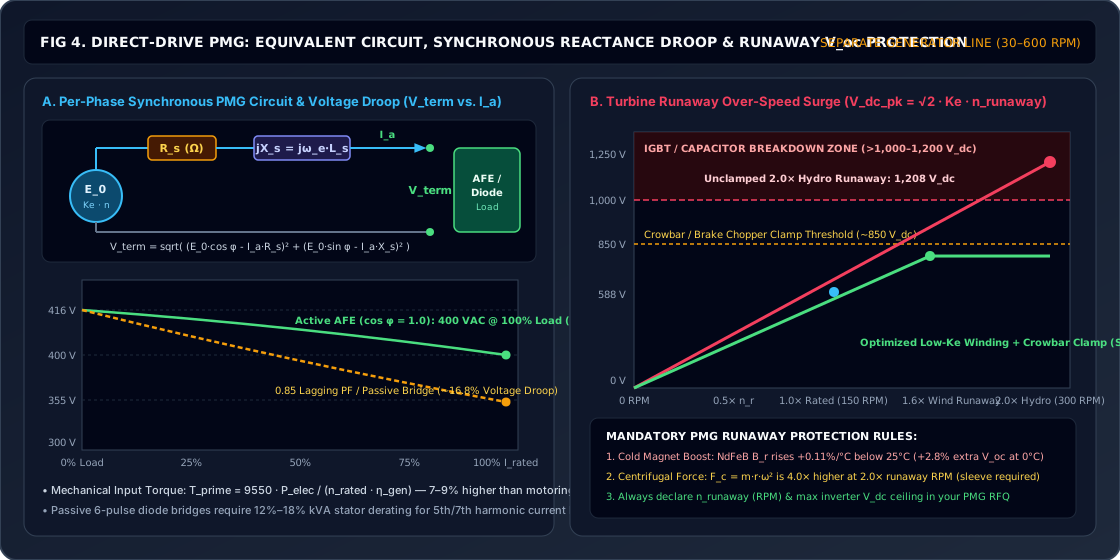
Permanent-Magnet Generator Inquiry: Prime-Mover and Output Data
A project checklist for a permanent-magnet generator inquiry, covering the prime mover, speed range, electrical output, load, protection, and interface.
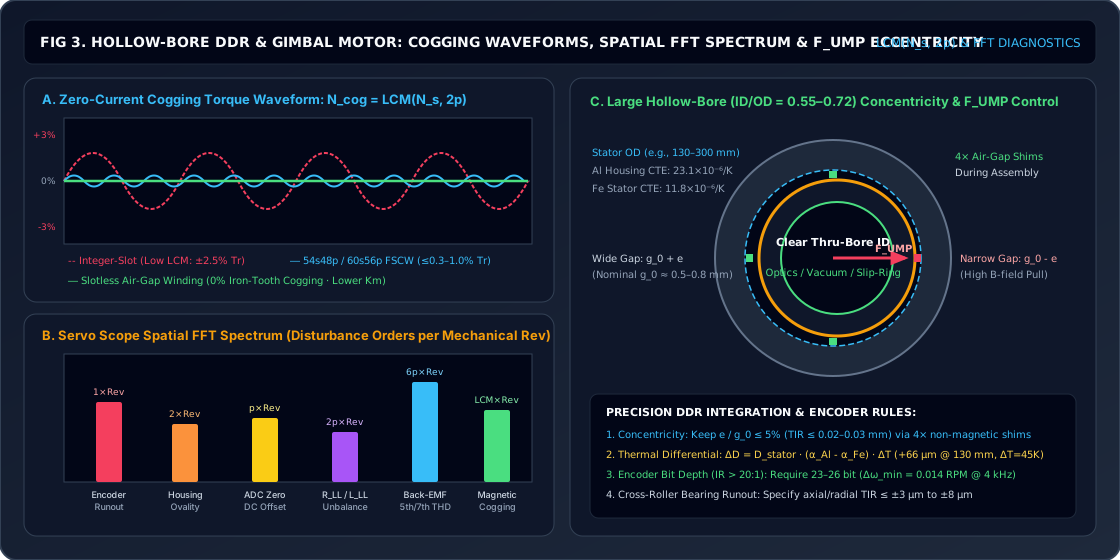
Hollow-Bore Rotary and Gimbal Motors: A Project Selection Checklist
Prepare a direct-drive rotary or gimbal motor inquiry with bore, load, motion profile, feedback, mounting, and thermal requirements.
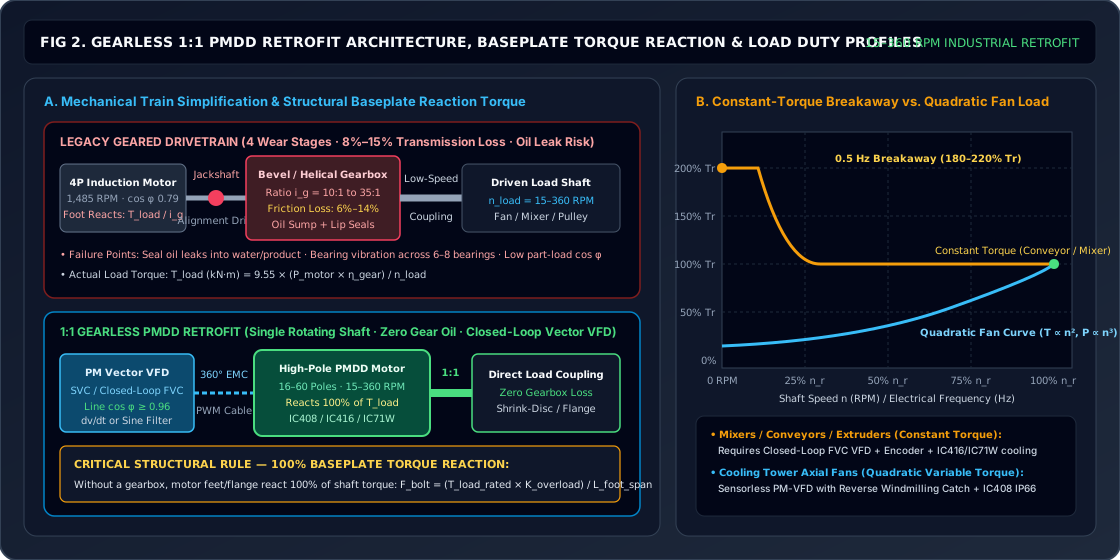
Direct-Drive Retrofit Assessment: Data to Gather Before a Quote
A practical site-data checklist for evaluating a possible direct-drive retrofit of a cooling tower, mixer, conveyor, or other industrial machine.
Company information
Operated by Magatom Dynamics Co., Ltd.
Legal entity and seller for new orders: Magatom Dynamics Co., Ltd..
This company signs contracts, issues commercial invoices and receives payments for new orders. Please use the payment details provided on your invoice. Supported invoice currencies: USD, EUR, JPY, GBP, CAD, AUD, SGD, HKD, CNH (Seller on contracts and commercial invoices is always Magatom Dynamics Co., Ltd.; JPY settlements use beneficiary Lianlian International Company Limited and all other supported currencies use Magatom Dynamics Co., Ltd. per the complete verified bank details on the issued commercial invoice).
Boundary notice: PMDD Motor (pmddmotor.com) is the project engineering and RFQ brand operated by Magatom Dynamics Co., Ltd.. Buyers may request Shenzhen or Dongguan as preferred sourcing regions. Actual supplier identity, manufacturing relationship, facility location, address, certifications, model ratings, equipment, and inspection protocols vary by order and are confirmed in the formal quotation and contract. No supplier facility is represented as Magatom-owned.